Allotment Journal: Plot update

There’s lots going on at this time of year and we have been kept rather busy this week. We have continued to prepare vegetable beds, this time on plot 2. We have planted some seed potatoes and some shallot and onion sets on the orchard plot. We have planted some sweet peas on plot one.

Orchard Plot

Image

Planting Seed Potatoes

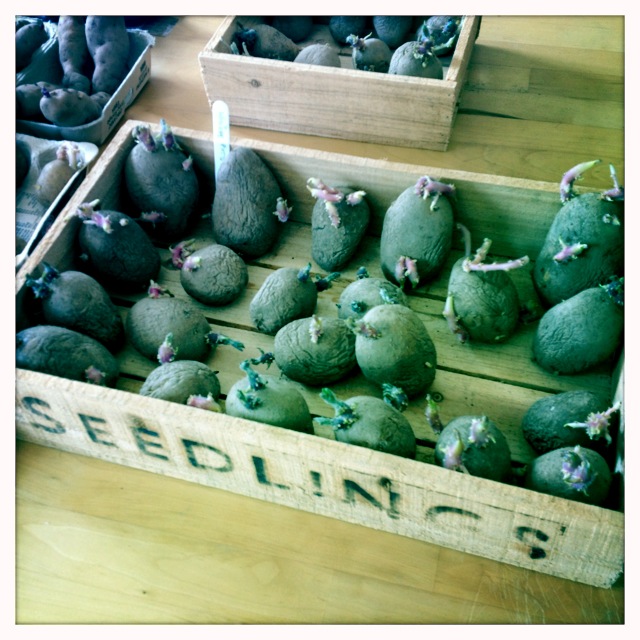
This week we planted a mixture of seed potatoes. These include:

First Early:

Typically a small potato that can be planted from February until May. It will be ready to harvest 10 weeks from the planting date.

  • Vales Emerald
  • Premiere

Second Early:

Again, typically a small variety of potato that can be planted from March until May. It will be ready for harvesting approximately 13 weeks after planting

  • Charlotte
  • Wilja

Main Crop:

These are usually much larger potatoes suitable for baking, roasting and mashing. Plant from March until mid May. They are ready to harvest approximately 20 weeks after plantings

  • Pink Fir Apple

Planting Shallot and Onion Sets

We have also planted some shallot and onion sets

Shallot Golden Gourmet sets. This is a RHS award winner. It produces relatively large bulbs and the incidence of bolting is said to be greatly reduced. We’ll see.

We’ve not grown onions before but we’re trying a red onion called Red Barron.

Plot One

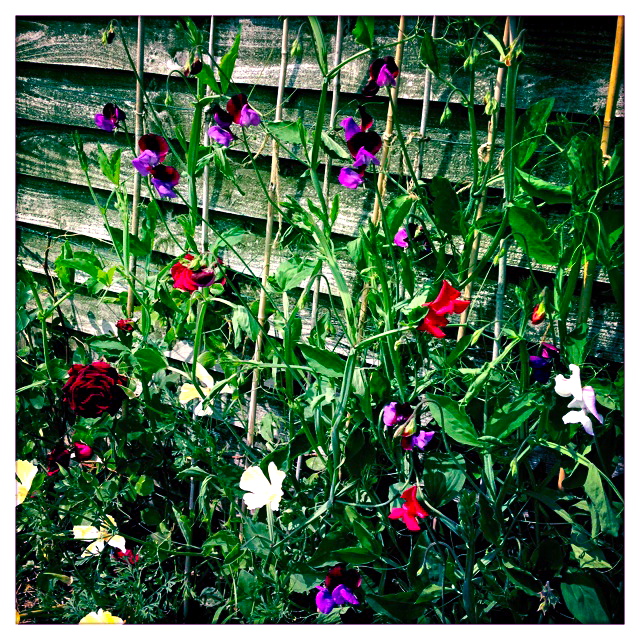
This week we planted some sweet peas. Although I had grown some from the seed at home, they were sadly eaten by snails. To our delight the local garden centre is now selling a good range of ‘odoratus’ highly perfumed varieties.

We bought the following:

  • Leamington
  • Wiltshire Ripple
  • Winston Churchill
  • Mrs Bernard Jones
  • Flagship
  • Beaujolais
  • Percy Thrower
  • Watermelon
  • Blue Skies

We planted some next to the shed, as we do each year,

Image

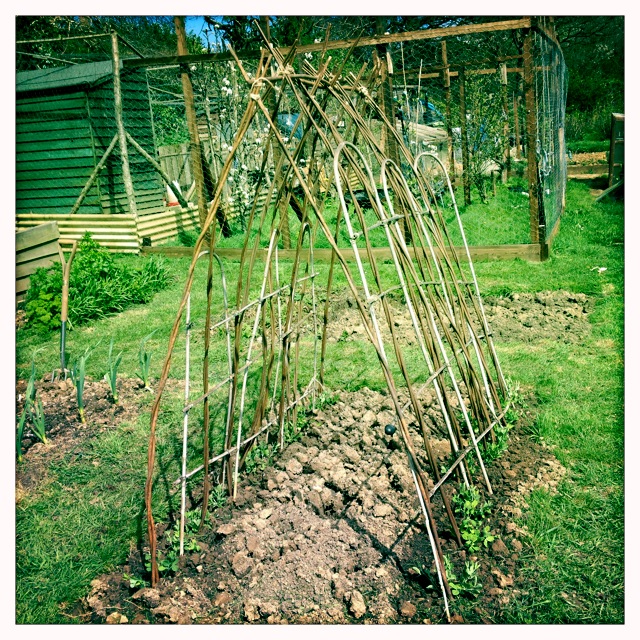
and we also constructed an arch on one of the smaller vegetable beds.

Image

It should be quite some display and the air will be filled with the most heavenly perfume. Can’t wait.

Plot Two

Most of the week was spent preparing plot two. Digging over the vegetable beds and removing weeds. Approximately three quarters of the plot is now prepared We also extended a couple of the vegetable beds making much larger beds.

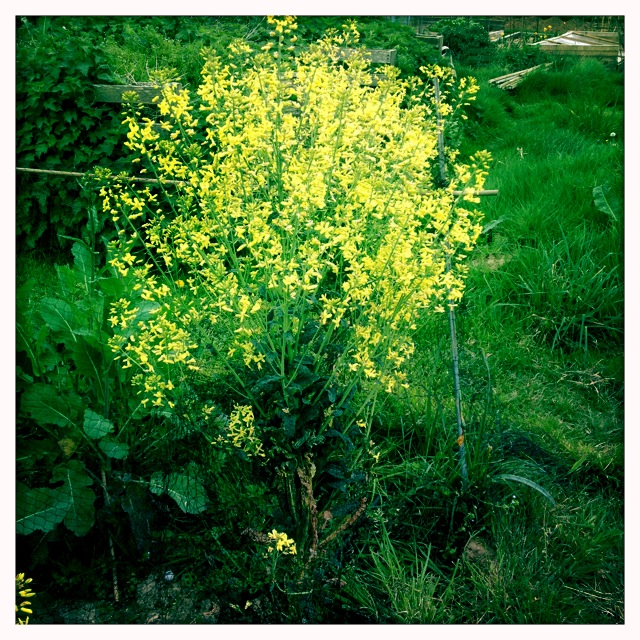
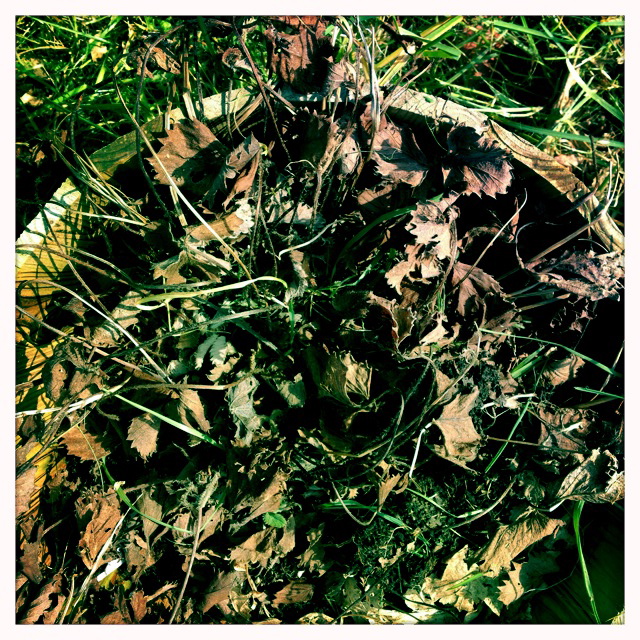
Currently there is very little growing on plot two. Just plants that we over-wintered. There is some parsley, some leeks and some kales plants that have gone to flower. I would have dug these out earlier as the leaves are now too tough to eat but they have been attracting bees.

IMG_5898

Posted in Allotment Journal

Strawberries


IMG_8800

Last year’s unexpected heatwave led to an unusually early crop of some of the best quality and largest harvests of strawberries enjoyed in the past 20 years.

We picked fragrant, deliciously sweet strawberries from May all the way through to September. Strawberries are one of my favourite summer fruits so I’m hoping we’ll be fortunate enough to experience something similar this year.

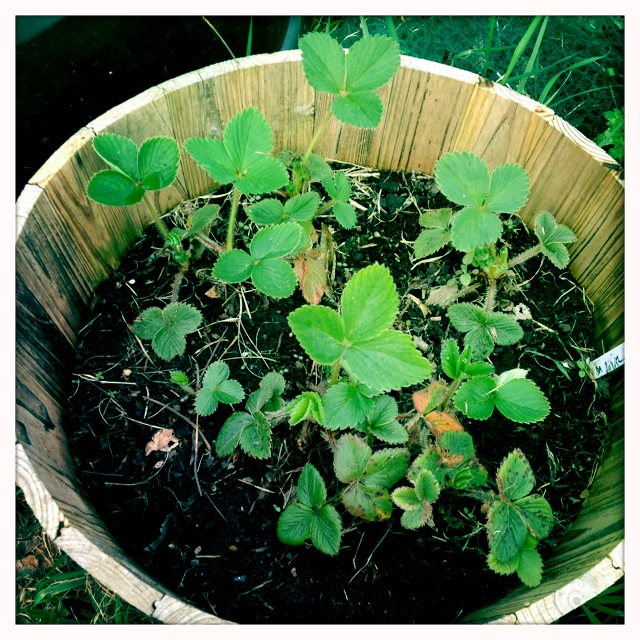
On plot one we have a strawberry bed; it’s now in it’s second year. We also have a few strawberry pots. We selected a number of different varieties, including Sonata and Elsanta, but our favourite variety has to be Tarpan. Tarpan is hybrid; it has beautiful dark rosie-red, semi-double flowers. It produces blooms and fruit all summer long and well into the autumn. The fruits are elongated with an intense sweet aromatic flavour.

Image

Strawberry plants are reasonably easy to maintain. The plant sends out runners  over the surface of the soil during the growing season. Usually in June or July. Whilst still attached to the mother plant, peg down the runner either side of the new crown. The new crown will produce roots and form a new plant. Once fully established, the plant can be cut free, typically in August. Don’t allow more than five runners to develop from each plant.

It’s best to pick fruits when the day is at it’s hottest; the fruits will be at their sweetest at this time.

At the end of the growing season the foliage will die back and go brown. It’s best to leave it like this over the winter months as it will provide the plant with some form of protection against the cold weatherImage

In the spring remove all the dead foliage. This increases light and air circulation, helping the new leaves to develop healthily. I fed our strawberry plants with some seaweed fertiliser to help kick start them. Keep the plants well watered whilst the new leaves are developing.

Image

The RHS suggests feeding fruiting plants with tomato feed with a high potash content to improve flower quality and fruit flavour. When the plants are in fruit, try to avoid watering from overhead as this may increase the chances of the fruit rotting. Using a mat of straw can also protect the fruits from soil splash.

As the plants get older it is advisable to thin out crown numbers. The RHS suggests pulling off the smaller crowns at the base, leaving just 3 to 4 crowns per plant. This will help concentrate the plants energy into producing good sized fruits. Didn’t know this and I’ll pop this job on the to do list!

After three years strawberry plants become less productive and more susceptible to disease. It’s also advisable to rotate strawberry beds every three years to help prevent diseases building up.

Posted in Fruit, Strawberries

Flower borders


Image

We think it’s really important to have a border of flowers to attract butterflies, bee and other pollinating insects.

Here are some of the plants we have in our flower borders.

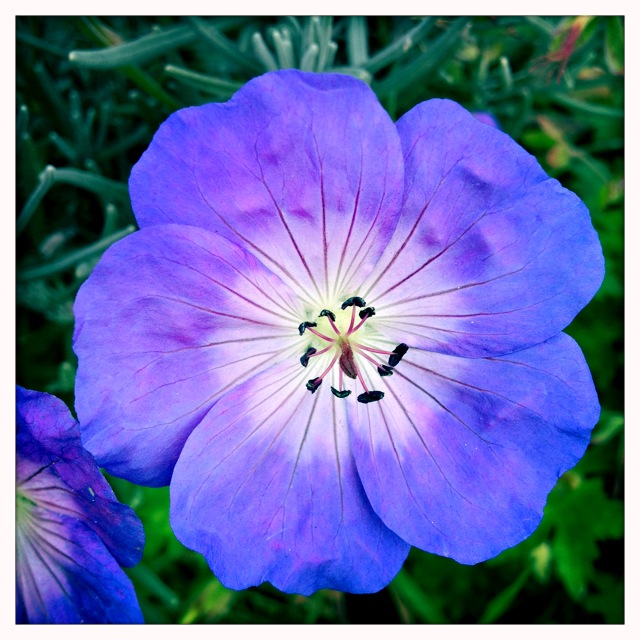
Rozanne – Geranium

Image

The geranium ‘Rozanne’ was announced as the RHS plant of the centenary and it’s easy to see why. Simply, it’s an extraordinarily beautiful plant. It’s a fully hardy perennial that flowers for months. It produces masses of papery violet-blue saucer shaped flowers from May through to late October.

‘Munstead’ Lavender

Image


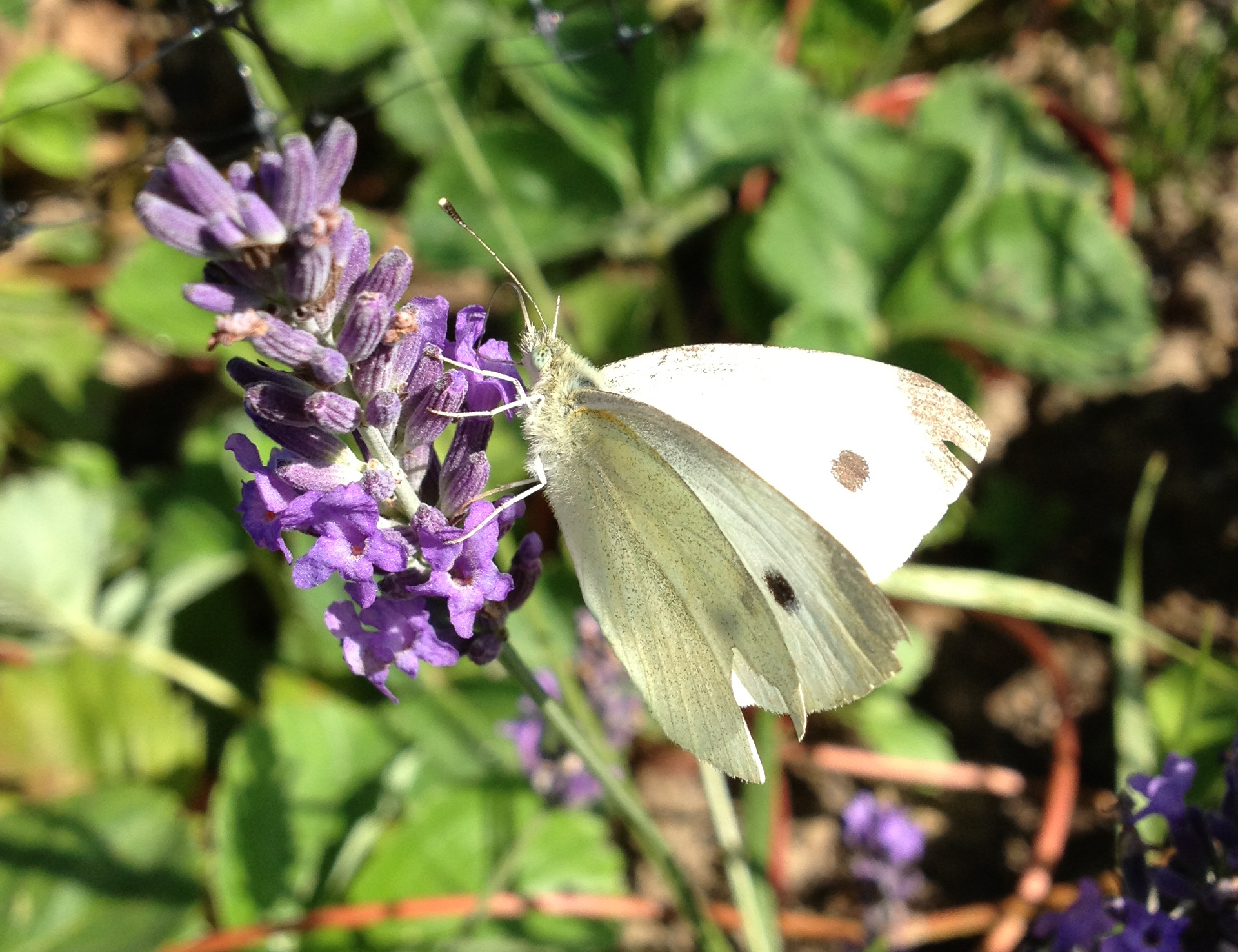
Lavender not only attracts both bees and butterflies, it looks and smells amazing. The flowers can be harvested to make lavender bags or in my case, I cook with it.

‘Munstead’ lavender is named after Gertrude Jekyll’s garden at Munstead Woods. It’s a fully hardy compact lavender with fragrant blueish purple flowers. It adds a stunning splash of colour from July through to late September.

Scabiosa Perfeca Alba – White scabious

Image

I love this plant, it’s pretty flowers seem to float on the end of tall stalks. The white scabious has large, frilly petalled, flowers and is long-flowering, typically from June may be through to October. It attracts butterflies and pollinating insects.

Erigeron Karvinskianus – Mexican Fleabane

Image


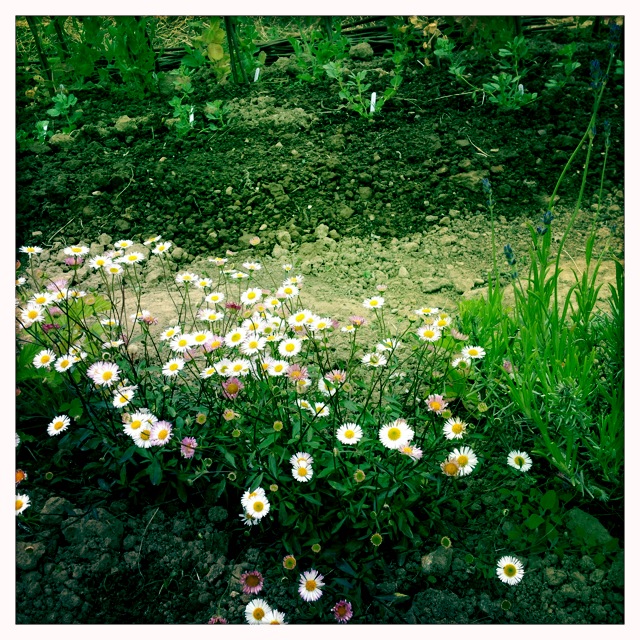
This is a herbaceous hardy perennial that forms a mat across the ground. It has pretty little pinky-purple and white daisy like flowers. Again it’s long-flowering, flowering from May until October.

We are yet to create a flower border on the Orchard plot, but plan to do that within the next few weeks.


Posted in Allotment Journal, Flowers

Quince Blossom

Image

Image

Thrilled. Our young quince tree is blossoming!

Posted in Fruit

April – What we’re sowing

April is one of the busiest months of the sowing calendar; it’s a seed sowing frenzy!

With the soil warming up, it’s possible to direct sow, but given previous experience I sow a lot of seeds at home. This speeds up germination and gives the seedlings a bit of a head start. The seedlings are transplanted when they are sufficiently developed.  This helps protect them from all the pesky pests such as slugs, snails, mice and birds, and adverse weather such as late frosts.

We are sowing in April:

Alliums
Image

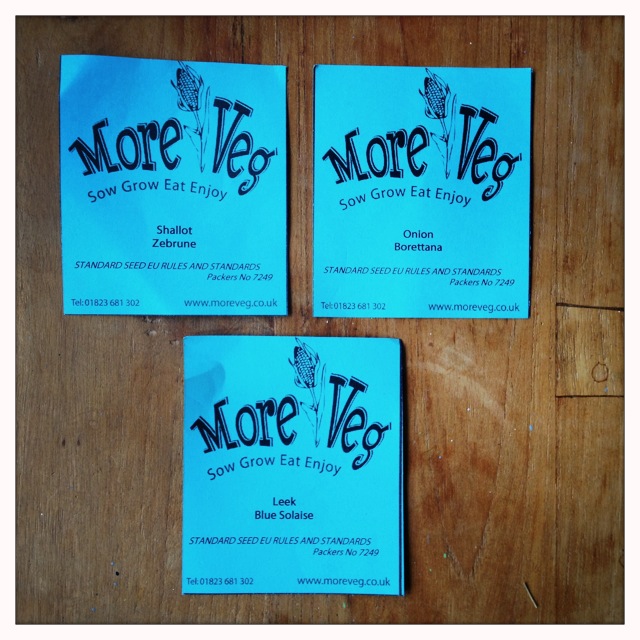
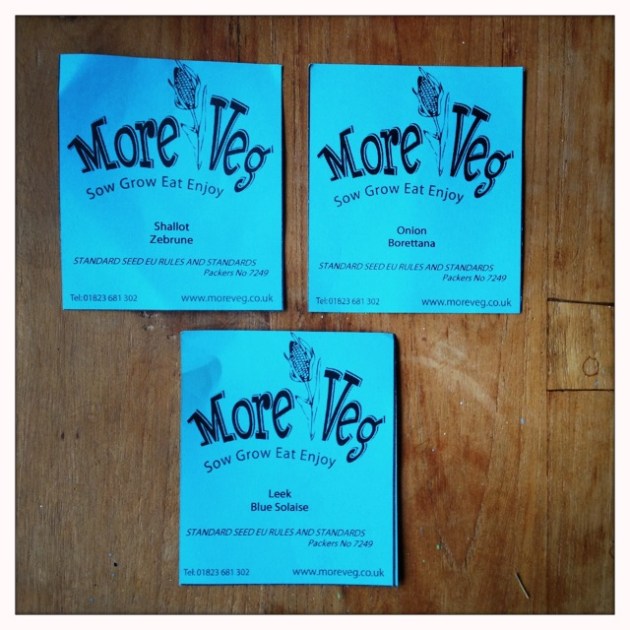
Whilst it’s much easier to grow shallots and onions from sets I thought it would be worth trying to grow some from seed this year. There are varieties of onions and shallots available in seed that are not available in sets so it enables us to try unusual varieties.

Also last year our shallots bolted due to the warm weather, we had grown them from set. This was a common problem across the allotment, except for those shallots grown from seed.

I have chosen shallot Zebrune seeds, whilst these are available to buy as sets, I like a long shallots. Much easier to peel. They have a mild sweet flavour.

The onion seeds I have chosen are Borettana and these are unavailable as sets. They are an Italian heirloom variety, they are small, flattened sphere, mild, sweet flavoured onions. They are perfect for roasting or using fresh in salads.

Finally, I LOVE leeks so we are going to grow loads this year. I have chosen the Blue Solaise leek for the second year. It’s an old French winter variety and extremely hardy and cold resistant so it over winters brilliantly. It’s also tastes good and leekie.

Legumes
Image

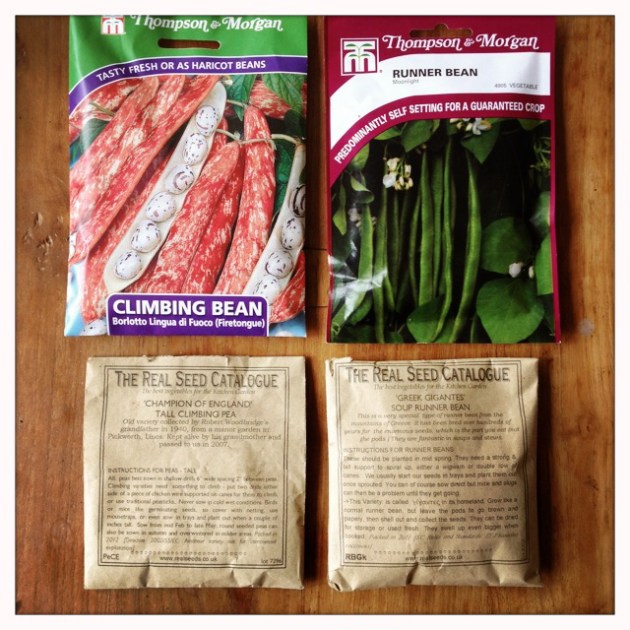
Legumes, I have to restrain myself, there are so many to choose from. I have chosen four types of legume….so far. I haven’t even looked at French beans yet.

Peas – Champion of England form the Real Seed Catalogue.

We grew these last year and they were amazing, probably the best pea I have tasted in years. Sweet and tender.

This is a very rare variety, rescued from extinction thanks to Robert Woodridge who kindly sent some seeds from his families seed bank to the RSC in 2007. It took 4 years to get the seeds viable to sell. This variety dates back to the 1840′s and is a tall pea, growing up to 8ft to 10 ft high. I have sown 60 seeds and plan to sow more shortly to ensure an extended crop. Hoping for a glut, they freeze well.

Runner Beans – Greek Gigantes from The Real Seed Catalogue

This is a new variety to the RSC and I just had to have some seeds to try.  This is another rare legume it originates from the mountains in Northern Greece.

As the name suggests the runner beans are ENORMOUS. This runner bean isn’t grown for it’s pod but the large buttery beans inside the pod. The RSC describe the seeds as alarmingly large! They can be used in stews, salads or to make a type of hummus. They can also be dried. I’m so excited to be trying this. I’m just debating what size growing module I shall use, the usual 3 inch pot probably won’t be big enough …. the seeds are over an inch long. This is going to be one monster of a plant.

Runner Beans – Moonlight 

I was reading the latest copy of The Kitchen Garden magazine, my favourite gardening magazine, and they had an interesting article about runner beans.

Runner beans typically have bright coloured flowers as they are dependent on bees and insects to pollinate their flowers. French beans however, are self pollinating.

The Moonlight runner bean is the first self pollinating runner bean, developed by the British seed company Tozer. They crossed a runner bean with a French bean. Crops are far more reliable and the beans are extra smooth skinned, stringless and fleshy with a proper runner bean taste… what can go wrong?!

Borlotti Beans – Lingua di Fuoco

Think small Italian version of Greek Gigantes…

These are delicious eaten fresh when the pod is semi mature, as flageolets; or fresh as haricots, when the pod is fully matured. These seeds can also be dried.

 Roots
Image

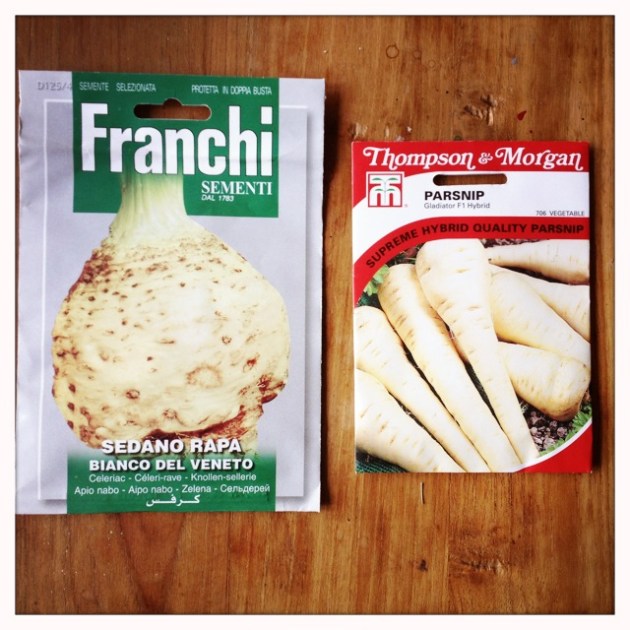
Celeriac – Bianco del Veneto

I LOVE celeriac, I use it as a flavoursome substitute for potatoes.

This particular variety comes from the Veneto region in Italy. The seeds are tiny, and the seedling are miniscule; it’s hard to believe they grow into such large root vegetables. Seed germination isn’t easy, so I have sowed plenty.

I have grown celeriac before, but I bought seedlings from the garden centre. They weren’t a great success, I ended up with some gnarly odd shaped roots that housed woodlice. So lets see what happens this time.

Parsnips – Gladiator F1

Parsnip seeds have to be sowed directly into soil as they don’t transplant well. The life of a parsnip seed is very short lived, seeds older than a year will typically fail to germinate. And then there’s the issue of the young seedling making it’s way through the soils crust as it germinates. It’s foliage is very weak and lacks the strength to push through overly ‘crusty’ soil, which sadly we have at the allotment. So yet again the Kitchen Garden magazine has come to the rescue. Using a dibber make a large hole in the soil, much the same as you would when planting leeks. Fill the hole with a mixture of grit and a good quality compost. Then sow the seed into the hole, 2 cm deep. Germination can be terribly slow, up to 30 days.

This particular variety is described as having a super smooth, blemish free white skin… I somehow fail to believe that, but we will see. The Gladiator F1 has a lovely sweet flavour and a good resistance to canker.

Chilli’s
Image

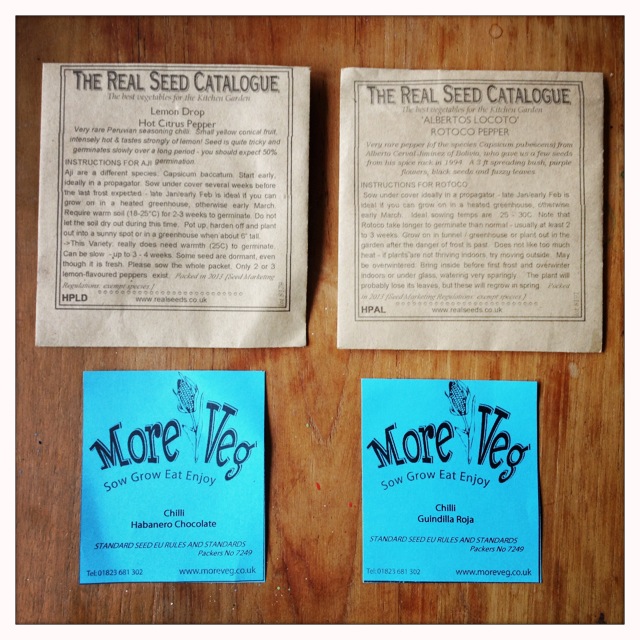
I’m a little late in sowing chilli’s but I’m hoping they will catch up. This is what I currently have on the go…

Lemon Drop – Hot Citrus Pepper – from the Real Seed Catalogue

This is a rare variety of chilli from Peru, and as its name suggests these chilli’s have a strong lemon flavour. Delicious in salsa’s or a lemony citrus chilli sauce.

Alberto’s Locoto – from the Real Seed Catalogue

Couldn’t resist this unusual seed. It’s a very, very, very rare chilli and the RSC only have limited stock, I know!

It has fuzzy leaves, purple flowers which develop into 1.5 inch red pendant shaped fruits. The seeds inside are black. It’s a hot chilli, but adds more of a lovely warmth to food than the sort of chilli that burns ones tonsils.

It can be treated as a perennial, providing it’s overwintered indoors. The plant should produce fruit for up to 7 years.

Habanero Chocolate – from More Veg

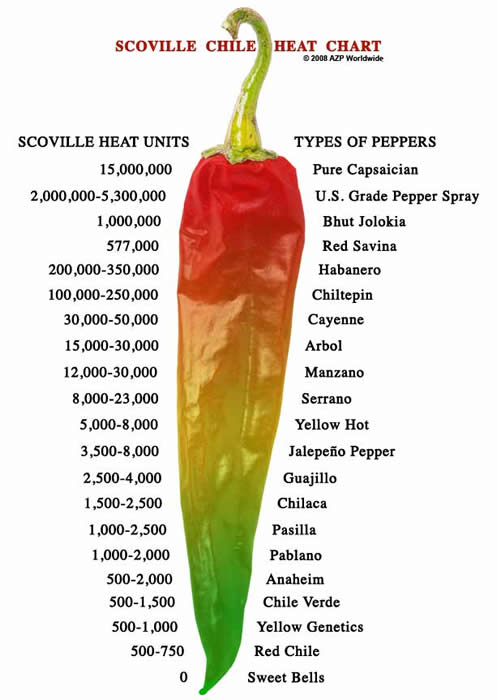
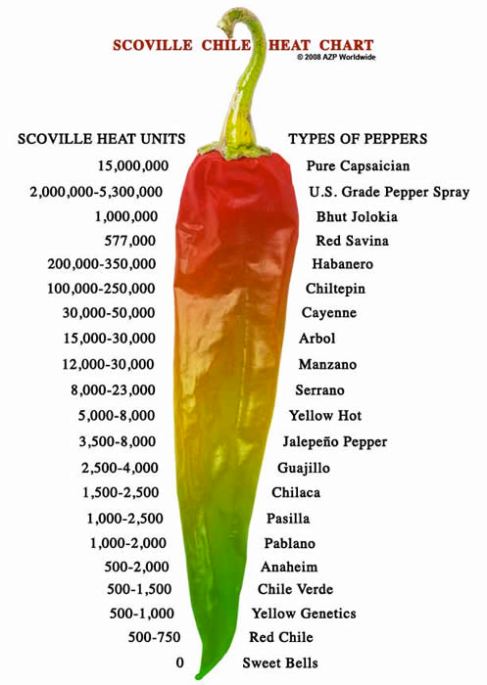
I was seduced by the word chocolate. I failed to read further than the word chocolate. Habanero Chocolate chilli’s are reported to be one of the hottest chilli’s in the world, with around 425,000 Scoville units.. wowser! As a comparison, Scotch Bonnets have a heat rating of between 100,000 to 350,000.

Scoville’o’meter
Image


Saying that, this chilli has a unique rich flavour which develops as the fruits mature from a bright green to a chocolate brown. I’m pleased to be trying this chilli, but will be wearing industrial strength gloves when handling it.

Guindilla Roja – From More Veg

A typical mild to medium chilli from northern Spain. It’s curved!  It turns red when mature and has a lovely sweet flavour. Perfect for all things tapas.

Brassicas
Image


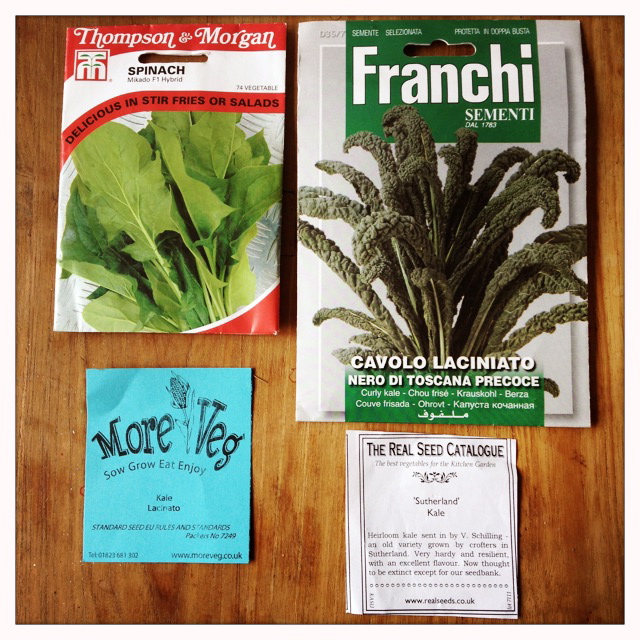
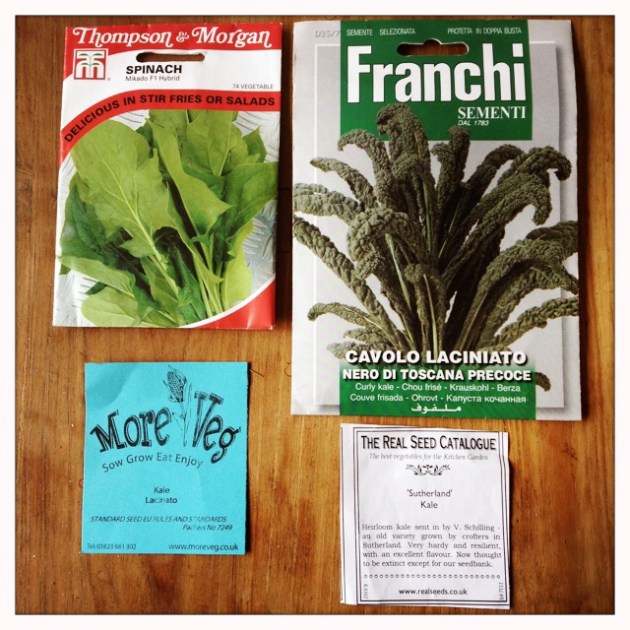
Spinach – Mikado F1

I love this spinach, it’s actually an oriental leaf and has delicious tender leaves. It can be grown throughout the summer as it’s bolt resistant.

Kale – Sutherland Kale – from the Real Seed Catalogue.

This is my absolute favourite kale. It’s tastes?  Imagine a cross between spinach and a spring green. It has pale green, flat interesting shaped leaves which are not tough or bitter. It’s fairly prolific, and best of all it’s pretty trouble free. I grew some last year and it was one of my favourite crops. So I’m definitely growing more this year.

The Real Seed Catalogue were sent a sample of these seeds back in 2003. It came from a 93 year old lady called Elizabeth Woolcombe of Drummie, in Sutherland. It had been given to Elizabeth some 50 years earlier by Angus Simmonds. He was doing research on Kale at Edinburgh University at the time. I say how lucky for us to be able to enjoy this incredible vegetable.

When it bolts, typically in spring, it sends up a flower shoot which looks like sprouting broccoli. I’ve not tried this yet, but these shoots are also supposed to taste very good.

I can’t recommend this kale enough. Please try it.

Kale – Lacinato – from More Veg and Franchi

This is an Italian Heirloom variety, with a blue green strap leaf. Also known as Cavolo Nero.

Pick the leaves when they are young otherwise they turn very tough.

Other

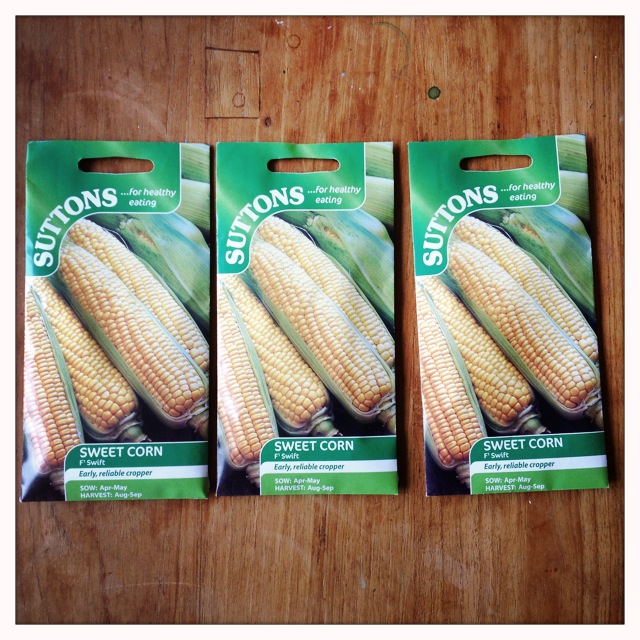
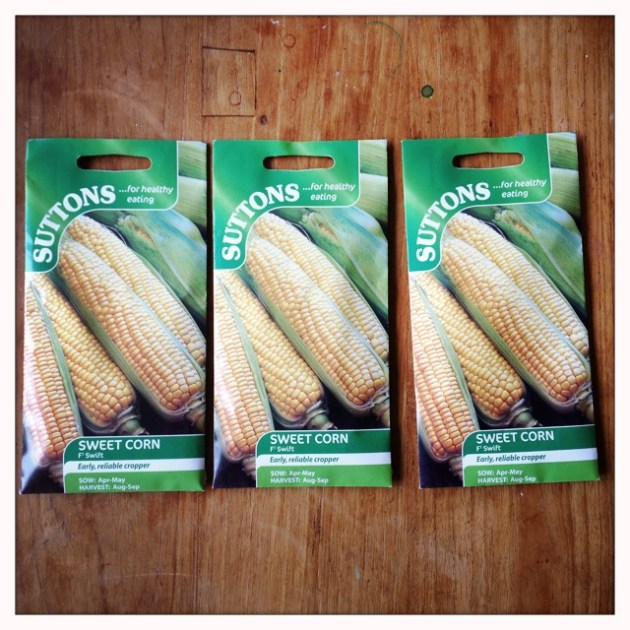
Sweet corn – Swift F1
Image

We LOVE LOVE LOVE sweetcorn and plan to grow loads this year.

Our allotment neighbour, Darrin, grew this variety last year and it looked amazing. Most of the plants had at least two cobs. So we thought we would give this a go.

 

Posted in Sowing and Growing, Uncategorized

Making way for a Quince tree

Image

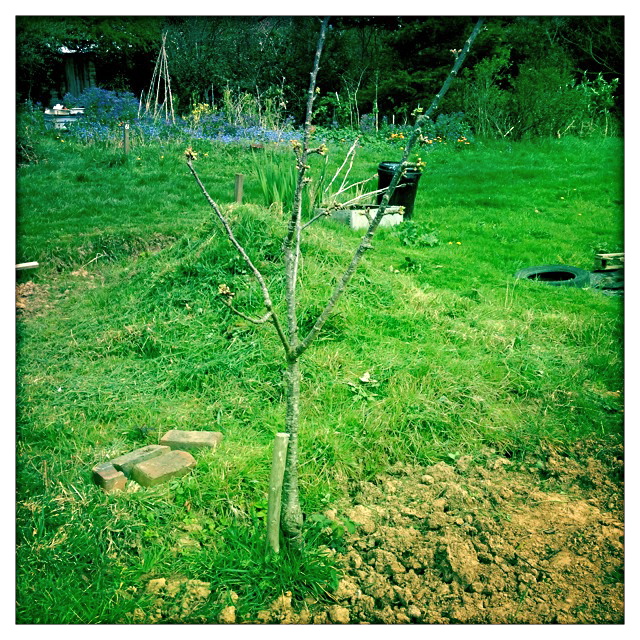
The orchard plot has five established dwarf root stock fruit trees, one of which is rather unpromising. The one above, a small cherry tree, that did absolutely nothing last year.

After a recent visit to the local garden centre we stumbled across a quince tree, a variety called Vranja. It, eventually, develops large, sweet pear shaped fruits. We had to have it. So I lugged it home in the back of my mini, which is suprisingly spacious. It is currently on my balcony enjoying the sea views but needs planting asap.

There was only one thing for it, the little cherry tree had to go. The lady who has the allotment opposite the orchard plot said she would love to have the sickly cherry tree and she would bring it on. She is the Doctor Doolittle of the plant world. Her huge plot is a beauty, naturally wild and magical.

It was the perfect time to transplant as the tree is just coming into bud

Image

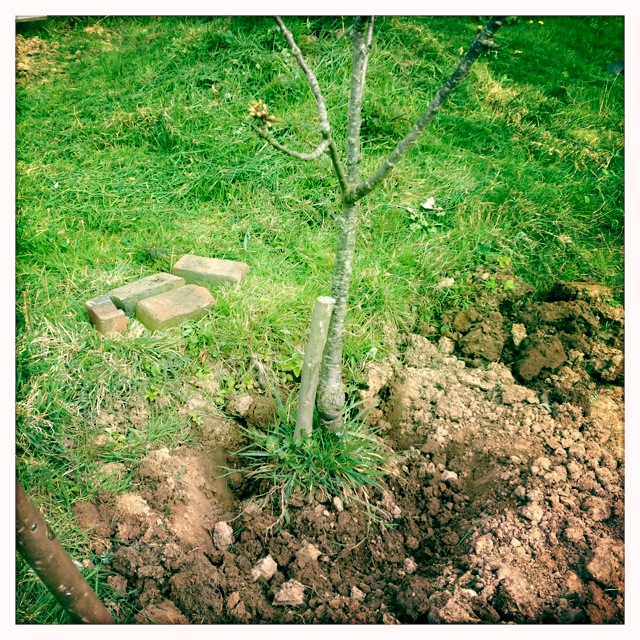
So i started digging

Image

And before long the cherry tree was out and on it’s new plot awaiting to be replanted

Image


This week, once the rain stops, we plan to plant the quince tree. I’m rather excited.

Posted in Allotment Journal, Fruit

Rust!

Image

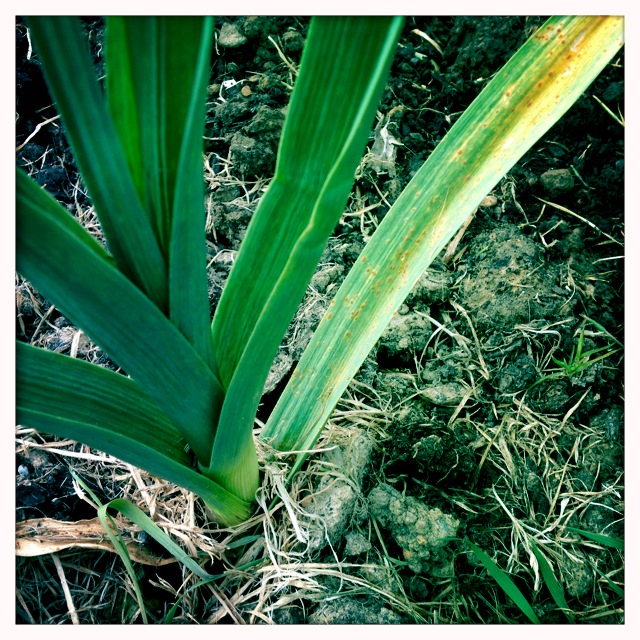
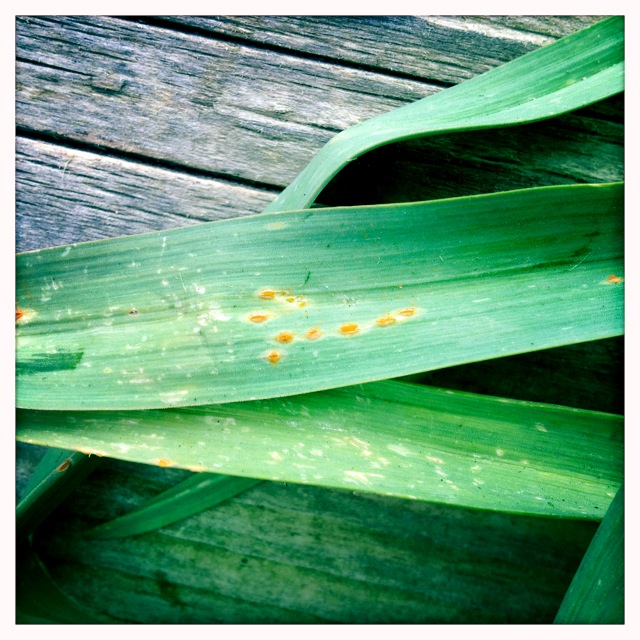
Not only does the seaside’s salty sea air cause metal to erode…but the garlic is also rusting!

Image


The winter months were extremely wet, and relatively mild, and it’s been unseasonably warm over the past week. With the addition of low levels of light this equates to one thing, the perfect breeding ground for RUST.

Rust is an airborne fungal disease. Leaves start to turn yellow and small orange blisters appear on the plants foliage.

Image

Sadly there is no cure. It will seriously affect the development of the bulbs, especially as it’s so early in the season. The best course of action is to remove the infected leaves and remain optimistic!

Posted in Allotment Journal, Garlic

Blossom!

Image

The fruit trees are in full blossom. Bees are visiting. Not saying a word, just keeping everything crossed!!!!

Posted in Pruning

Allotment Journal: Orchard Plot update.

This has been a rather busy week; I have neglected the orchard plot for quite a while, so it was time to roll up the sleeves and get busy. Urgently required, vegetable beds so the seed potatoes and, shallot and onion sets can finally be planted.

Below is the orchard plot in March 2013, shortly after we aquired it…. it needed work.

Pretty isn’t it!

Image

The plot was partially covered with carpet and underlay by the previous tenants and there were weeds galore. We were initially pleased to see the plot partially covered, thinking it would reduce the number of weeds needing to be dug out…. but we were WRONG!

We found this underneath…

Image

There were literally metres and metres of bindweed root running across the soil. This plot hadn’t been touched in years and it was certainly going to be a challenge to get the plot cleared and prepared sufficiently to be able to grow vegetables on.

Given the amount of work to be done, we decided to prepare this plot in stages. Our plan was to clear and cultivate the right hand side of the plot in year one. Over the past year, this section has been dug over four times. It’s been a painstakingly slow process as we have been removing the couch weed and bindweed roots by hand. Whilst not completely weed free, the amount of weeds reappearing is greatly reduced.

After the final dig of the season, last November, the bare soil was covered for the winter. This was to help prevent the leaching of the soils nutrients due to rain, and to help keep the soil weed free.

So, this week, I pulled away the covering to reveal a predominantly weed free ground. I was thrilled.  I have been busily digging, still removing the odd weed and roots, and we are now ready to plant our seed potatoes, which are chitting themselves at home.

Image

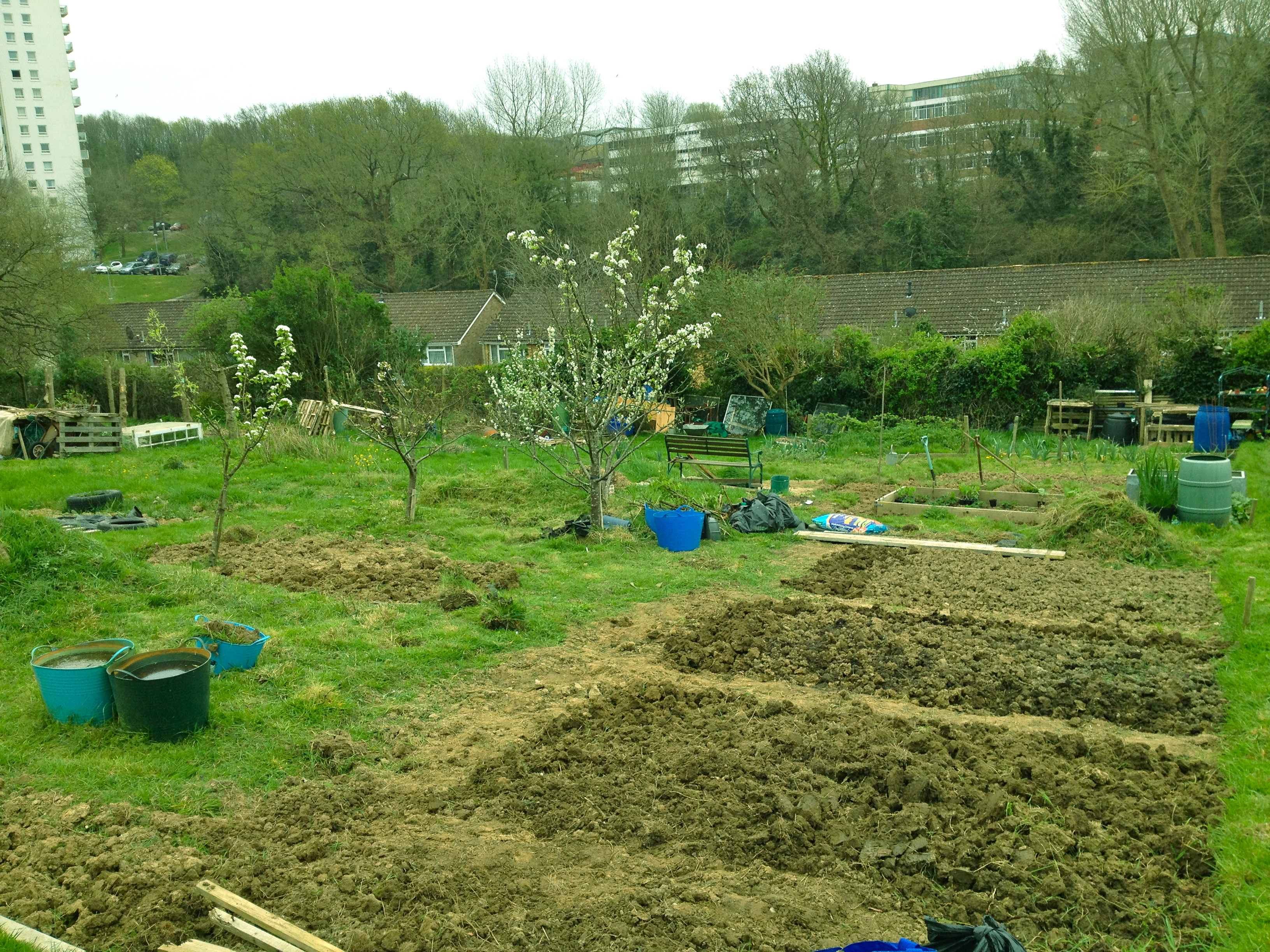
I created three large vegetable beds, one for potatoes, one for alliums and one for either legumes or brassicas. Not decided yet…

The plot now looks like this. It’s been a hard but very rewarding weeks work.


Image


Posted in Allotment Journal

Growing Garlic


Image

Garlic can be planted in either the autumn or the spring. It will be clearly labelled when it’s purchased. I have always found it best to plant garlic in October/November, as garlic requires a long growing season and coldness to promote germination. Garlic planted in the spring tends to result in much smaller bulbs.

One of the most important things to get right, when growing garlic, is soil preparation. Garlic grows best in free draining, light, fine, and sand like soil, emphasis on the fine! If you are like me and have heavy clay soil it’s essential to take time to prepare the soil properly. Add grit and plenty of organic matter to break up the heavy clay soil structure. Garlic will not tolerate water logging; the bulbs will simply rot or become diseased resulting in rather pathetic specimens.

Garlic grows best in soil with a pH of around 6.5 to 7.0. Soil that is too acidic or too alkaline will slow the rate of growth.

So once the soil is properly prepared it’s time to plant to garlic. Carefully break up the bulb. This should be done at the time of planting and no more that 24 hours in advance. Only use the plumpest cloves and discard the small ones.

Cloves should be planted in a sunny position 6 to 8 inches apart and 1 to 2 inches deep. The rows should be around 10 to 12 inches apart. Deeper planting can result in larger bulbs but this isn’t advised if you have heavy soil. Plant the cloves basal plate down so the pointy end is at the top.  Fill the hole with compost. Water.

To protect the garlic over the winter period, cover with mulch and fleece to prevent birds from pecking at your crop.

In terms of care, garlic is not too needy. Keep the growing area weed free. During dry spells water the garlic thoroughly, but stop watering completely during the last few weeks of growth as too much water can encourage rot to develop. As the growing season is so long you could apply potash or seaweed fertilizer in February to give the garlic the additional nutrients that it needs to grow. Both of these fertilisers may help protect the garlic plant from contracting rust (see potential problems below)

There are two types of garlic to choose from. Hardneck garlic and softneck garlic.

Types of Garlic

Hardneck

Better adapted to northern winters so typically hardier than the softneck varieties.

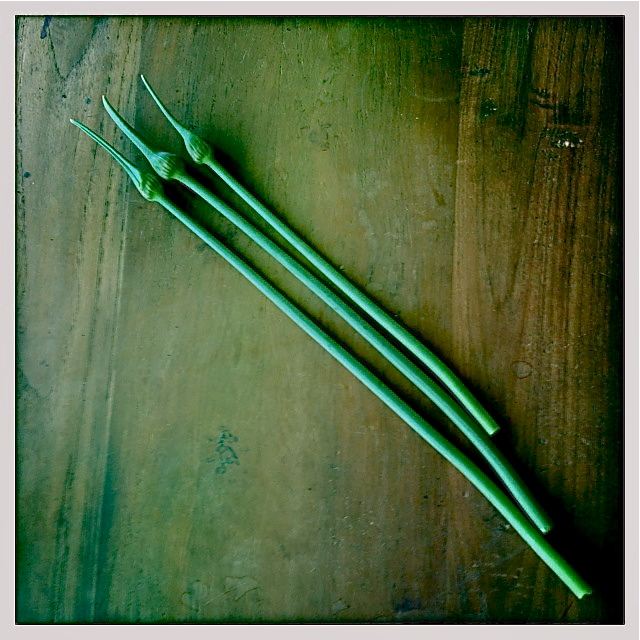
This type of garlic produces a flower stalk about a month or two before the garlic bulb reaches maturity. This is called a scape in the culinary world.

IMG_8327

I personally LOVE scapes and they’re not available to buy in shops, so it’s a real seasonal treat. Cut off the flower stalk to ensure the plant is directing all it’s energy into the growth of the bulb. I have found that the hardneck garlic bulbs tend to be smaller than the softneck varieties at maturity.

Has a stronger flavour

Best gathered when the foliage has changed colour. The leaves will start to turn yellow.

Varieties- Purple Heritage Moldovan; Lautrec Wight, Chesnok Wight, Aquilla White, Spanish Rocambole Wight, Bella Italiano Wight, Avignon Wight, Elephant Garlic, Edenrose

Softneck

This type of garlic is typically grown in warmer climates and is therefore less hardy than the hardneck varieties. The garlic you find in the supermarket is usually the softneck varieties.

It has much better storage qualities than the hardneck variety.

It will not produce a flower stalk unless stressed.

Best harvested when the leaves start to fall over and lie on the ground. Early Purple Wight garlic may be ready as early as May.

Varieties – Iberian Wight, Early Purple Wight, Tuscany Wight, Picardy Wight, Provence Wight, Solent Wight, Carcassonne Wight, Albigensian Wight, Mediterranean Wight, Venetian Wight, Celdor, Wight Cristo, Germidour

Harvesting Garlic.

This is clearly dependent on the weather and variety but as a rough guide garlic should be ready to harvest around June or July. (Purple Wight garlic may be ready as early as May)

Signs to look for

Softneck – the leaves will wilt, fall over and lie on the ground.

Hardneck – about a month or two before maturity a flower stalk will appear. The leaves will start to change colour, they start turning yellow, and this is the time to harvest.

Always use a fork to remove garlic from the ground making sure you don’t damage the bulb.

Lay the bulbs out to dry in an airy place.

Hardneck garlic can be stored for around 3 months.

Softneck garlic can be stored much longer, possibly into mid winter.

Potential Problems Growing Garlic

Rust

Rust is a fungal disease; the spores are carried by the wind.

Rust thrives in wet, humid conditions with low levels of light. 2012’s wet summer provided the perfect environment for rust to thrive causing a huge problem for most garlic growers. Poorly drained ground or soil with high nitrogen content can make the outbreak of rust worse. There is no cure once the plant has rust. Ensure crop rotation to reduce the risk of spreading the disease. After an outbreak don’t grow garlic or other members of the alliums family for at least 4-5 years.

The main signs of rust are a slight yellowing of the lower leaves or the tips of younger leaves and then appearance of small orange blisters on plant leaves from May onwards.

If you spot rust remove the infected leaves (these should be burned). Removing these leaves may give you the few extra weeks required for the bulb to reach maturity. Or harvest the bulbs if almost ready.

By planting garlic in the autumn the bulbs should be close to reaching maturity by the time rust appears. Therefore rust shouldn’t impact the development of the bulb. Garlic planted in the spring won’t be developed well enough and plants that contract rust are likely to be lost.

Regular spraying with sulphur compounds or increased levels of potash hoed in around the plants in February may reduce the risk of rust.

White Rot

Typically occurs where there has been continuous alliums cultivation on the same plot. The disease is soil borne.

The main sign of white rot is the plants will start to fade away in April – June. The bulb will become white dust as the disease progresses. White cottony fungal growth with black spots will become visible.

Destroy all the affected plant material by burning. Do not grow alliums in the affected area for at least 15 years!

Onion Fly

The adult onion fly will emerge from pupae that have over-wintered within the soil. They emerge May/June time. They can reproduce within a few days.

The onion fly lays its eggs onto and at the base of the onion or garlic. The eggs are small, white and elongated with dark stripes that run longitudinally. These eggs hatch into maggots that eat away the base of the onion or garlic and its roots. This can lead to secondary damage such as rotting of the garlic bulb as the maggot bores in and out of the roots. The dirty rotten maggot!

The main signs of onion fly is yellowing and drooping leaves or the plant dies for no apparent reason. If this happens lift the affected plant and check the base carefully for little grey maggots.

There is no cure at this stage. If you keep the soil around the plants well cultivated from March to May it should add some protection.

Posted in Garlic
Calendar
February 2026
M T W T F S S
 1
2345678
9101112131415
16171819202122
232425262728